
How to Run Your Building on AI: Suggestion to Action

Agentic AI started in the server room. Now it's expanding into how buildings actually get managed.
Last time, we told you the building was alive. Buildings were starting to think for themselves, robots were taking on the jobs nobody wanted, and predictive maintenance was quietly replacing the far more expensive habit of waiting for things to break. Three shifts, one thesis: the intelligence is real, but someone still has to run the building underneath it.
Now the building's gotten ambitious. This post is about the fourth shift — and the operating loop that has to exist underneath it for any of it to actually work: signal, decision, assigned work, verified completion, portfolio insight.
From Suggestion to Action
There's a distinction working its way through every real estate tech conversation in 2026: the difference between AI that tells you something and AI that does something. The first three shifts were mostly about the former — sharper sensors, better predictions, a dashboard that surfaces an anomaly and waits for someone to act on it.
Agentic AI closes that loop. Instead of flagging a problem and stopping there, it can route the work, trigger the next step, and update the record — narrowing the gap between a signal and an actual task. Gartner predicts 33% of enterprise software applications will include agentic AI by 2028. Gartner also predicts that at least 15% of day-to-day work decisions will be made autonomously through agentic AI by that same year.
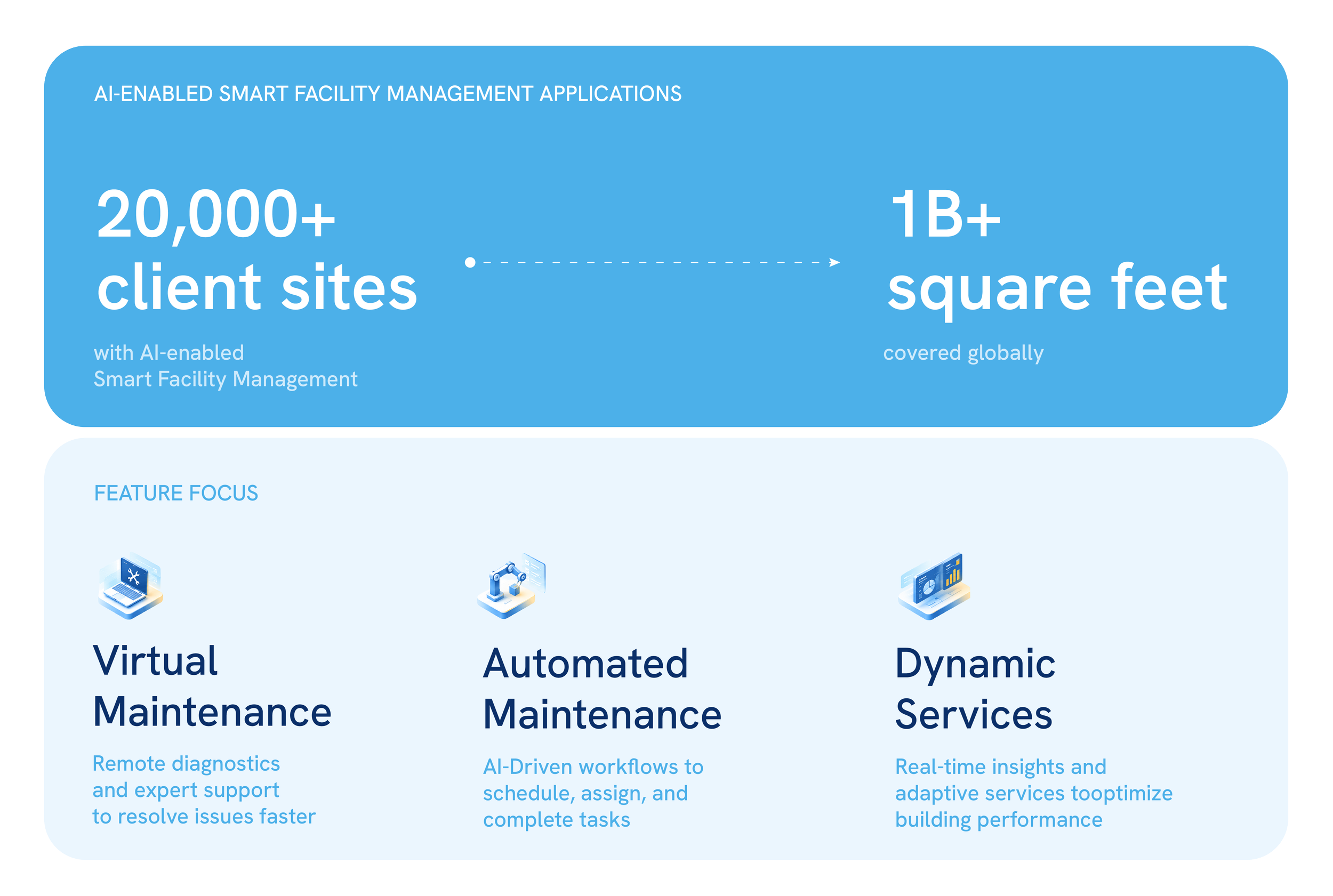
Infographic showing CBRE's AI-enabled Smart Facility Management deployed across 20,000+ client sites and over 1 billion square feet globally, with three feature highlights: Virtual Maintenance, Automated Maintenance, and Dynamic Services.
Source: CBRE
In facilities management, the category is already taking shape. CBRE says its AI-enabled Smart Facilities Management solutions are deployed with published case material describing virtual maintenance, automated maintenance, and dynamic services (CBRE-reported figures). Vendors are also shipping named agentic products: Facilio announced its "Atom" agent suite in February 2026, and Fexa announced "FexaAI" in April 2026.
The Gap Between Piloting and Winning
Here's what the keynotes tend to skip: a 2025 survey of over 1,500 real estate decision-makers found 88% of firms already piloting AI. Only 5% say they've hit their goals with it. More than 60% describe their own organization as strategically, organizationally, or technically unprepared for what they've already rolled out.
Real Estate AI Adoption is Ahead of Outcomes (2025)
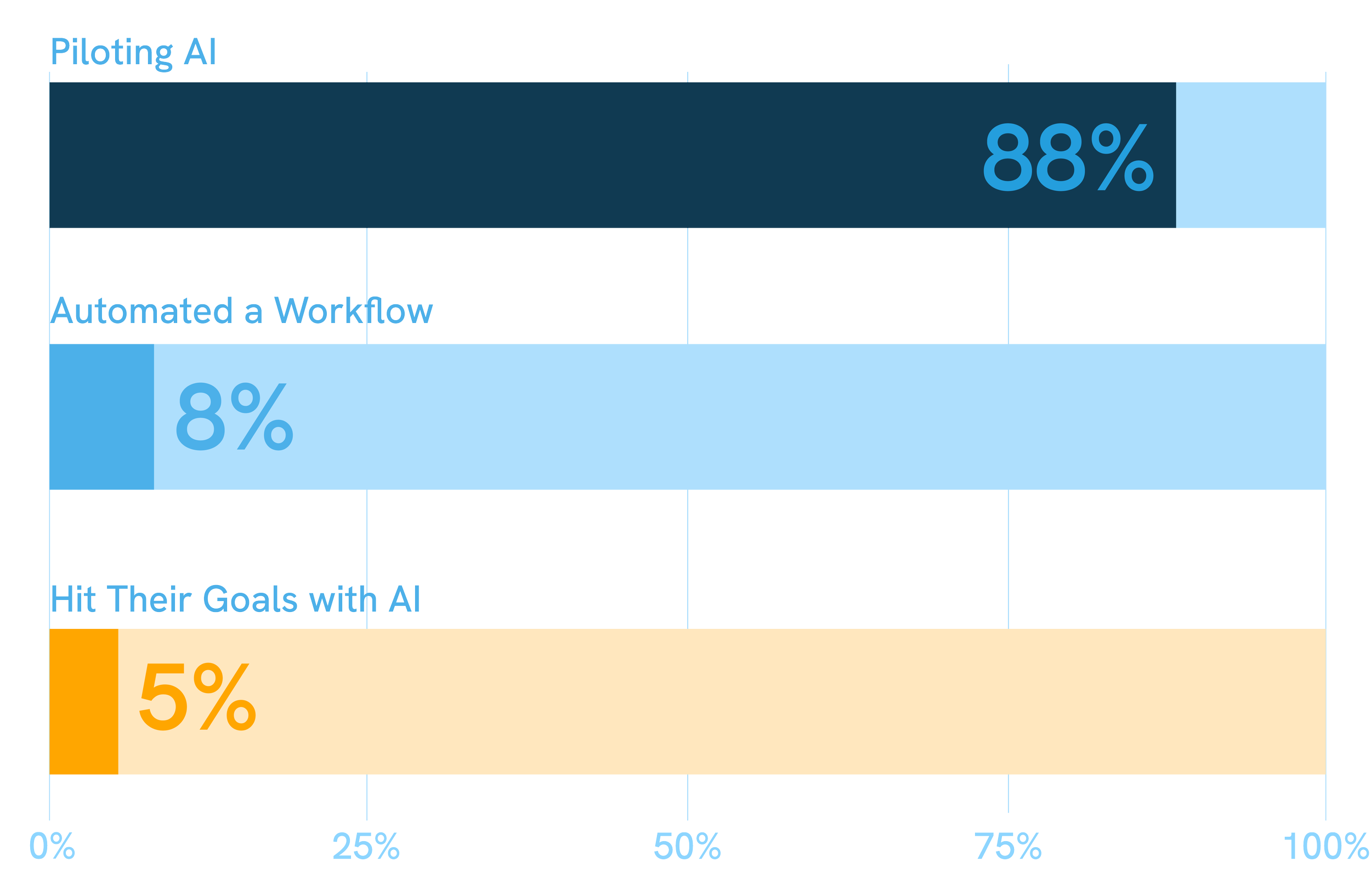
88% of real estate firms are piloting AI. Only 5% say they've actually hit their goals with it.
Source: JLL 2025 Global Real Estate Technology Survey: Buildium 2026 State of Property Management
An agent can be handed the authority to dispatch a technician. But if work orders live across three disconnected systems and asset history sits in a spreadsheet nobody's touched since spring, the agent has nothing dependable to act on. The gap here has less to do with a shortage of intelligence, and everything to do with a shortage of somewhere real for that intelligence to work.
Where Fleet Comes In
This is the part worth being specific about, because "operational backbone" can sound like a slogan until you see what it actually replaces.
When an issue gets flagged, whether by a technician walking the roof, a sensor in the mechanical room, or an AI agent parsing a data feed, Fleet turns it into a task with an owner and a deadline. Every property in the portfolio shows up on one map dashboard, so finding out which site something happened at stops eating up half a morning. Every repair gets logged against that asset's full history, so six months later, nobody's reconstructing from memory whether that HVAC unit has failed before. It all rolls up into one reporting view that shows what's overdue, in progress, or done, across every site, updated as it happens rather than assembled by hand at the end of the week.
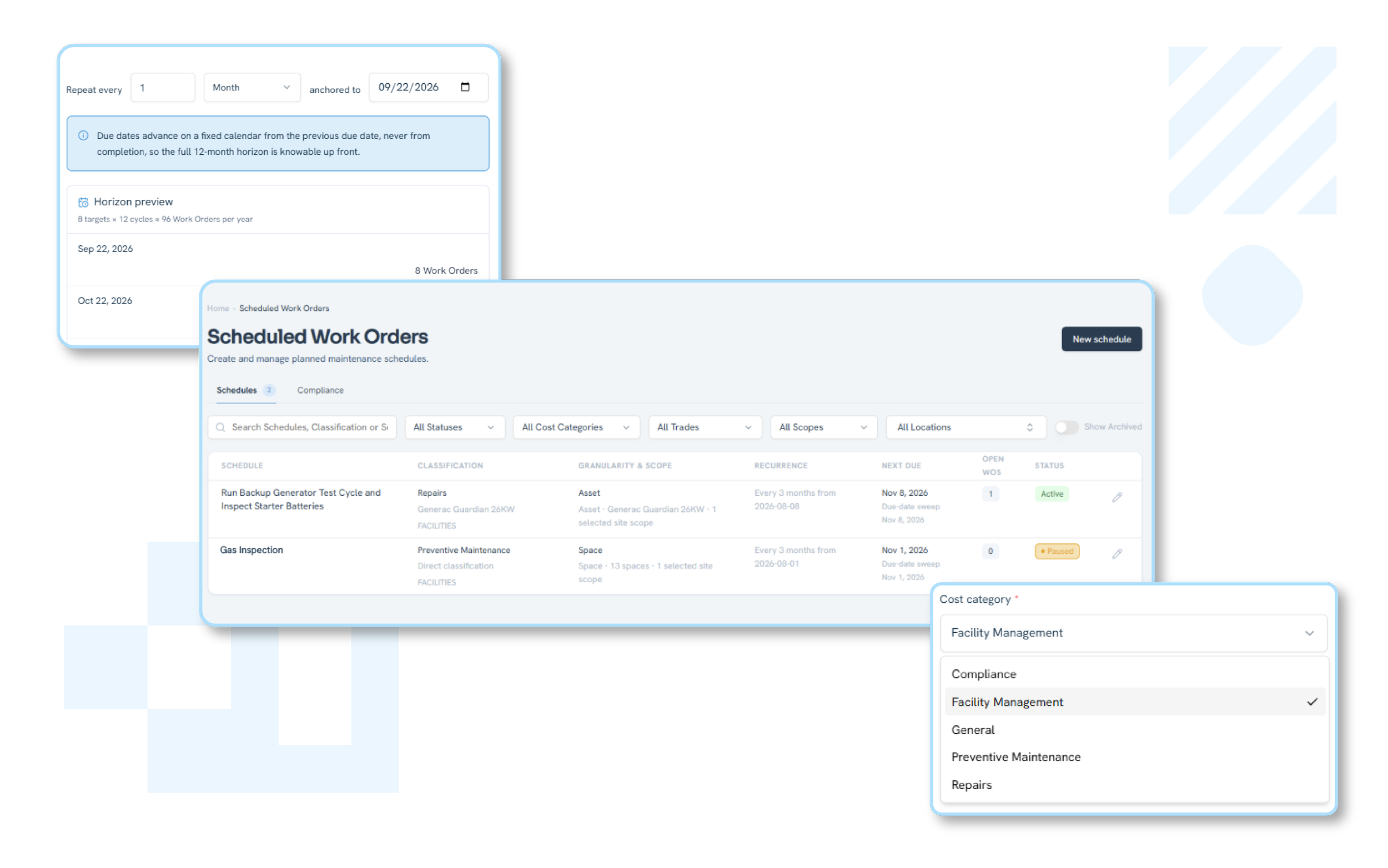
This is what 'somewhere to land' looks like in practice: Fleet's Scheduled Work Orders turn recurring maintenance into a standing calendar, so preventive work happens on schedule instead of waiting on someone to remember.
Fleet's own workflow automation is built for exactly this handoff: routing a flagged issue to the right technician, triggering the right checklist, and carrying it through to close without someone manually shepherding it across four different tools. An AI agent can get smarter every year. What it hands its output to still has to hold up every single day.
Looking Ahead
Buildings are getting more capable, and evidently, more autonomous. The industry's own numbers suggest most teams haven't yet built the foundation that autonomy needs to actually pay off, which leaves plenty of room for whoever builds it first.
The building can be as ambitious as the vendors promise. Fleet's job is making sure it has somewhere real to put that ambition to work.
See how Fleet gives your team, and your AI, a real place to run the building: try our free demo at staging.runfleet.com/demo, or keep reading our latest insights.
Source: JLL’s 2025 survey, Frost and Sullivan forecast, June 23, 2026 release, the US Department of Energy
See Fleet in Action
Manage maintenance, compliance, assets, and daily operations from one platform.
